


Equine-Assisted Therapy in Boulder

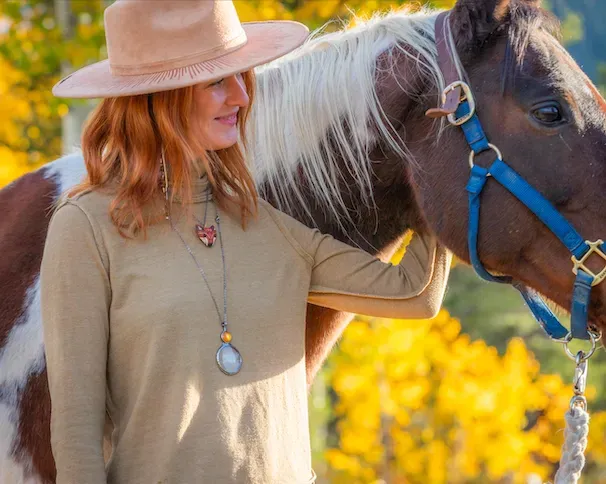
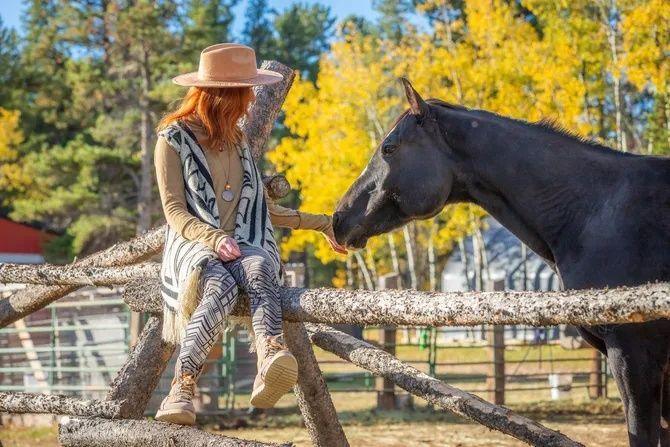
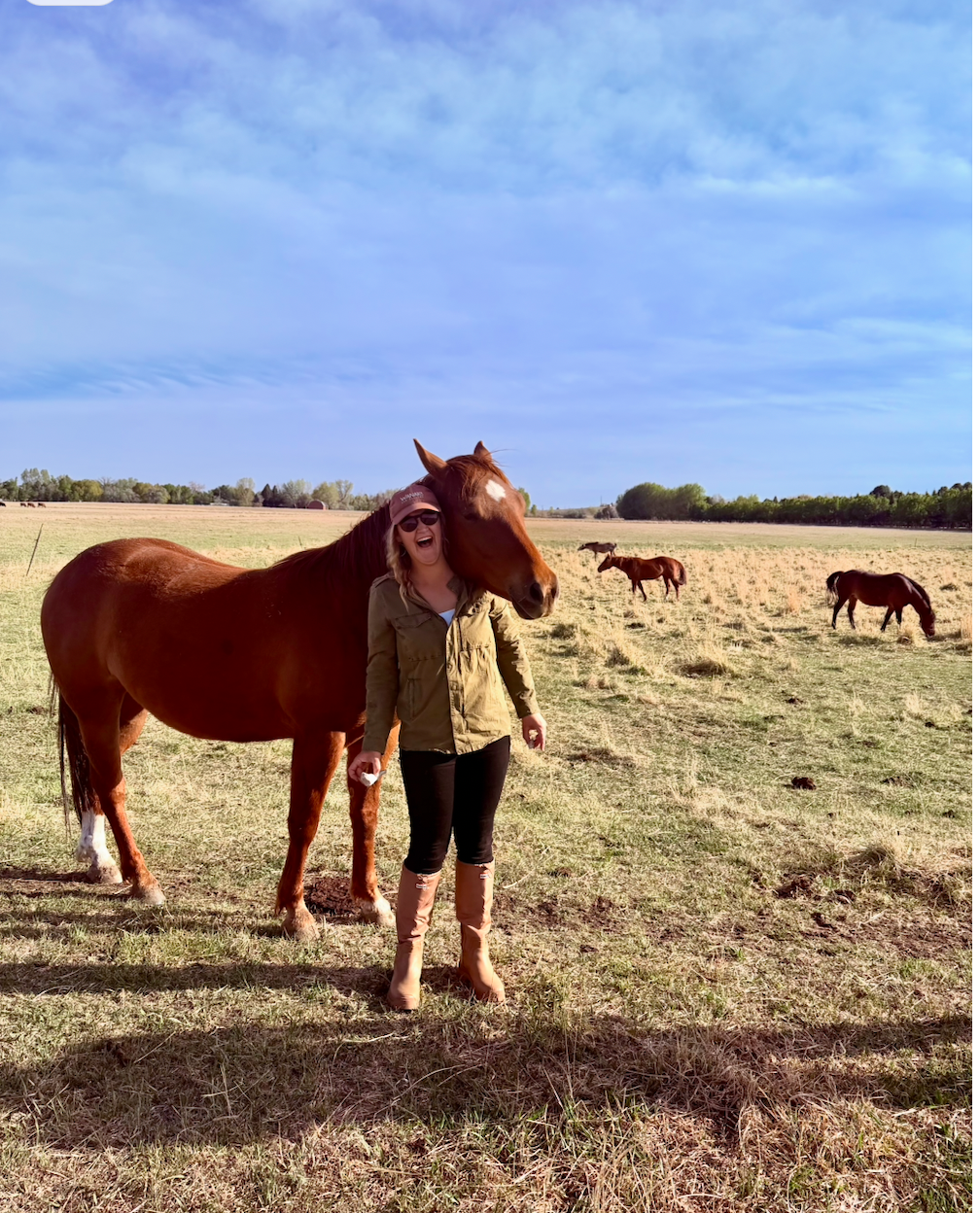
Equine-assisted therapy involves interacting with horses outdoors to improve mental and emotional health. This unique approach uses the intuitive nature of horses to provide a non-judgmental space, helping individuals develop self-awareness and tackle personal challenges without needing prior experience with horses.

  • Title or Question

    Describe the item or answer the question so that site visitors who are interested get more information. You can emphasize this text with bullets, italics or bold, and add links.
  • Title or Question

    Describe the item or answer the question so that site visitors who are interested get more information. You can emphasize this text with bullets, italics or bold, and add links.
  • Title or Question

    Describe the item or answer the question so that site visitors who are interested get more information. You can emphasize this text with bullets, italics or bold, and add links.

LEXIE GLISSON therapy & wellness lcsw

Equine-Assisted Therapy in Boulder & Golden

Equine-assisted therapy involves interacting with horses outdoors to improve mental and emotional health. This unique approach uses the intuitive nature of horses to provide a non-judgmental space, helping individuals develop self-awareness and tackle personal challenges without needing prior experience with horses.

I help individuals in the Boulder and Golden areas rediscover their authentic selves through mindfulness, movement, and interactions with animals and nature. I offer Equus coaching and both individual and group therapy sessions, available online or in-person at various Front Range locations in Colorado. Whether you choose virtual sessions or in-person experiences, I am here to guide your journey toward personal empowerment and healing.

ABOUT me

Lexie Glisson, LCSW

Therapeutic Services in Boulder & Golden, Colorado

Discover a range of nature-based therapeutic modalities, each designed to aid in healing and personal growth. These approaches harness the restorative powers of the natural world to support your well-being and help you reconnect with your inner strength.

Equine-Assisted Therapy

An experiential form of therapy that involves interacting with horses to foster emotional growth and facilitate healing processes. This approach leverages the natural therapeutic presence of horses to help individuals work through emotional challenges.

Nature-Based Therapy

This therapeutic approach utilizes the natural environment to promote healing and wellness, enabling individuals to reconnect with their evolutionary roots and actively engage with the natural world, which is vital for maintaining both mental and physical health.

EMDR

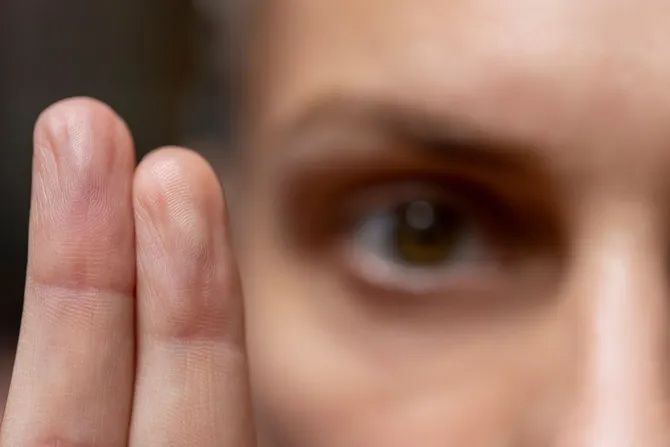
Eye Movement Desensitization and Reprocessing (EMDR) is a proven therapy method aimed at helping individuals recover from trauma and distressing life events.

Additional Modalities Offered

Relational Therapy

Enhances interpersonal relationships by exploring and addressing patterns in how individuals interact with others.

Mind-Body Therapy

Combines tailored yoga practices and mindfulness to improve physical and mental health.

Animal-Assisted Therapy

Integrates interactions with animals to enhance emotional and physical healing in therapeutic settings.

Other Modalities

Additional therapeutic techniques that support diverse healing and personal growth needs.

Explore Your Social Role:

Take Our Online Quiz

Discover Your Role in the Herd

Discover your unique role in group dynamics with our quick "What Herd Member Are You?" quiz. Are you the Leader, the Nurturer, or another vital member? Uncover your social strengths and learn how to use them in daily interactions. It's free, fun, enlightening, and takes just a few minutes.

Blog

By Lexie Glisson January 31, 2026
Why You Can Be Safe but Not Feel Safe: And What Horses Mirror  Safety isn’t just a thought. It’s a nervous system experience. There’s a big difference between being safe and feeling safe : Being safe means there’s no present-moment threat. Feeling safe means your nervous system agrees. If you’ve ever been in a totally normal moment, nothing dangerous is actually happening, but your body is acting like something is wrong, you’re not alone. You might notice a tight chest, foggy thinking, an urge to escape, or a sudden numbness. That’s often a conditioned response : an inner state that doesn’t match your outer reality. This is where a tool called dual awareness can help. What is dual awareness? A nervous system tool for feeling safe Dual awareness is when you place equal attention on your outer world and your inner world . It helps you check for congruence between: what’s actually happening right now, and what your nervous system is experiencing. When your inner experience matches your outer circumstances, you’re more likely to respond with choice and clarity. Step 1: How to check for safety in your environment Before we do anything internal, we start with the obvious question: Am I actually unsafe right now? If there’s a real present-moment threat, that’s not the time to talk yourself out of it. Your nervous system is doing its job. If you’re physically safe, here are a few gentle ways to orient to the present moment: What do I see right now? Where are my feet? What sounds do I hear? Step 2: How to check your breathing, body, and thoughts Next, shift your awareness inward and notice what’s happening without forcing it to change. Breath: fast, slow, shallow, deep Body: tense, relaxed, strained Thoughts: scattered, racing, absent, foggy, sharp, hyper-alert Then try naming your experience in a way that creates a little space: “A part of me feels scared.” “A part of me wants to leave.” Instead of: “I’m not safe.” This small shift can help you stay connected to what’s happening inside without becoming consumed by it. Step 3: How to tell if you are safe but not feeling safe Now that you’ve tuned into both your outer world and inner world, ask: Does my internal experience match my external circumstances? Being safe + feeling safe is a congruent state. Being safe + feeling unsafe is an incongruent state. Incongruence doesn’t mean you’re doing anything wrong. It often means your nervous system is responding from old learning rather than present-moment reality. What horses mirror in equine-assisted therapy: congruence and nervous system state When working with horses, they can support this process by mirroring congruence or incoherence in real time. Horses are especially sensitive to authenticity. They don’t care if you’re sad, mad, bad, or glad. What matters most is whether your inner state is congruent with your outward expression. As you attempt to connect, you may notice patterns in how horses respond. Signs a horse may sense calm and congruence Turn toward you with soft eyes and gentle curiosity Eat or drink water (often a sign of rest and digest) Hold their head in a neutral or lowered position; ears forward or neutral Stand with a leg cocked or lie down to rest Signs a horse may sense stress, activation, or incongruence Become restless, busy, or more alert Lift their head or pin their ears back Break connection and move away Test boundaries by crowding your space or bumping you These are only a few examples, and it’s always more complex than one behavior. It’s about the whole scene: the context, the relationship, and the overall vibe. That’s also why it’s important to do this work with an experienced equine professional. In session, I use my own dual awareness to track what’s happening and help you and the horses move toward deeper congruence. How you rewire the nervous system: repetition and returning to the present Dual awareness helps you stay connected to yourself and your environment in the present moment without getting swallowed by a conditioned response based on the past. Every time you notice you’re elevated and you come back to reality, you’re reprogramming your nervous system. Every time you catch an old story and choose to reorient to the present moment, you’re reprogramming your nervous system. Every time you become aware that your body is reliving an old experience that doesn’t match what is actually happening right now, you’re building a new bridge. You’re learning to respond to the world as the mature adult you are, instead of like the younger part of you that didn’t know what to do. Therapy support in Boulder and Denver: equine-assisted therapy, EMDR, and nervous system work If you’ve been wondering why you can know you’re safe but not feel safe, you’re not alone, and it’s workable. Dual awareness is one of the ways we start building that bridge. Want support with this work, with or without horses? Reach out to schedule a consultation and we’ll explore what kind of therapy support fits best.
By Lexie Glisson January 27, 2026
Wildness as a Revolutionary Act in a Chaotic World
By Lexie Glisson January 6, 2026
Into the Underworld: Transformation on Horseback in Ecuador
SHOW MORE